
Want To Achieve a 1600 SAT Score? Here’s Your Guide

Looking to achieve 1600 SAT Score? That’s a perfect goal! Let’s help you achieve this.

The SAT (Scholastic Assessment Test) is one of the most important standardised tests for college admissions in the US.

It’s a gateway to prestigious universities and scholarships, making it a critical milestone for students aiming for academic excellence.

Achieve Perfect 1600 SAT Score Tips Admitix
Official SAT logo since 2017

What is the Highest SAT Score?

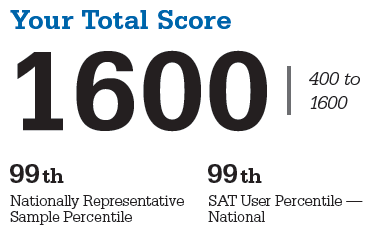
The SAT is scored on a scale of 400 to 1600.

The highest possible SAT score is 1600, which is a perfect score. This score is achieved by earning the maximum 800 points in the Math and Evidence-Based Reading and Writing (EBRW) sections.

Achieving a perfect SAT score is rare but not impossible! It requires a combination of hard work, strategic preparation, and consistent practice.

Why Does Your SAT Score Matter?

How to get a perfect 1600 on SAT
MIT accepts SAT scores upwards of 1580. Photo credit: MIT News.

Your SAT score plays a significant role in college admissions. It helps colleges evaluate your academic readiness and compare you with other applicants.

A high SAT score can:

  • Increase your chances of getting into top universities.
  • Make you eligible for merit-based scholarships.
  • Strengthen your overall application, especially if your GPA is not as competitive.

How to Achieve 1600 SAT Score
Achieve Perfect 1600 SAT Score Tips Admitix
Photo credit: McElroy Tutoring

Achieving a perfect 1600 on the SAT requires a focused approach.

Here are some tips to help you aim for the top:

1. Understand the Test Format – Familiarise yourself with the SAT structure, including the types of questions in each section. Knowing what to expect can help you manage your time effectively during the test.

2. Practice with Official SAT Materials – Use official SAT practice tests to get a feel for the real exam. These tests are designed to mimic the actual SAT, giving you a clear idea of your strengths and weaknesses.

3. Focus on Weak Areas – Identify the sections or question types where you struggle the most and dedicate extra time to improving them. For example, if math is your weak point, focus on algebra, geometry, and problem-solving.

4. Learn Time Management – The SAT is a timed test, so practice answering questions quickly and accurately. Use a timer during practice sessions to simulate test conditions.

5. Review Mistakes – After every practice test, review your mistakes carefully. Understand why you got a question wrong and learn how to approach similar questions in the future.

6. Consider Professional Guidance – Enrolling in SAT prep courses or working with a tutor can provide personalised strategies and insights to help you achieve your target score.

Benefits of a Achieving a 1600 SAT Score

Achieve Perfect 1600 SAT Score - Tips Admitix
Only 0.07% of students achieve a perfect 1600 SAT score!

While a perfect SAT score is not mandatory for college admissions, it does come with several advantages:

  • Stand Out in Admissions: Make your application stand out at competitive schools like Harvard.
  • Scholarship Opportunities: Many universities offer full or partial scholarships.
  • Boost Confidence: Get a serious confidence boost and head start on your academic journey abroad!

Quick Recap For Your 1600 SAT Score Preparation

TipExplanation
Understand Test FormatKnow question types, section layout, and timing
Use Official Practice TestsMimic the real test environment for accurate prep
Focus on Weak AreasAllocate extra time to your weakest sections (e.g., Math, Reading)
Practice Time ManagementUse timed sessions to simulate test pressure
Review MistakesLearn from every wrong answer and adjust strategies
Get Professional HelpUse tutors or prep courses for customized guidance

Need Personalized?

Achieving the highest SAT score is a challenging but rewarding goal. With the right preparation, dedication, and guidance, you can maximise your potential and open doors to incredible opportunities!

For expert guidance and personalised support on your SAT preparation journey, visit Admitix.

Let us help you achieve your dream SAT score and secure admission to the college of your choice!

FAQs – Perfect 1600 SAT Score

Q. What is a good SAT score?


A. A good SAT score depends on the colleges you’re targeting. Generally, a score above 1200 is considered competitive, while a score above 1400 is excellent.

Q. How rare is a perfect SAT score?


A. Less than 1% of test-takers achieve a perfect 1600 SAT score, making it a rare and impressive accomplishment.

Q. Can I retake the SAT to improve my score?


A. Yes, you can take the SAT multiple times. Most colleges consider your highest score during the admissions process.

Q. How long should I prepare for the SAT?


A. Preparation time varies for each student, but most experts recommend studying for at least 3-6 months before the test.


What Are College Credits? How Are They Earned?

The phrase “college credits” is likely familiar to anyone researching college programs. It’s one of those things that nobody really explains, but everyone thinks you understand.

What are they then? And why are they important?

Let’s explore this in simple terms through this blog.

College Credits US

What Even Are College Credits?

Think of college credits as little progress markers, like leveling up in a game.

Each course you take is worth a certain number of credits, usually based on how many hours you spend in class and on coursework.

Rack up enough, and boom – you’ve got yourself a degree.

So, when someone says, “I need to take 15 credits this semester,” what they mean is they’re juggling around five classes, each worth three credits

How Are Credits Measured?

It’s all about the time you put in. A standard rule of thumb:

  • 1 credit course = 1 hour of class + 2 hours of homework per week
  • 3-credit course = 3 hours of class + 6 hours of homework per week

Multiply that by a 15-week semester, and you start to see how those numbers add up.

Now, this isn’t a perfect science – some courses demand way more time, and others might be easier. But generally, if you’re taking five three-credit courses, expect to spend around 45 hours a week on schoolwork. Yes, that’s basically a full-time job.

What is the required number of credits for each semester?

Most students find that 15 credits per semester is the magic quantity that puts them on track to graduate in four years.

However, there is flexibility – some students take more credits to graduate early, while others take fewer and make up the difference with summer classes.

Just keep in mind that full-time student status usually starts at 12 credits, but dropping below that can mess with financial aid and other benefits.

How Do You Earn College Credits? – The Three Categories

Now, here’s the fun part: you don’t just collect credits – you have to earn them. Furthermore, not all credits are made equal.

General Education (Gen Ed) Credits

Think of these as the “you need to be a well-rounded human” courses aka core credits, which are essentially the general education courses all students must complete.

Every school has them, and while they might feel random (why does an engineering major need to take literature?), they’re designed to give you a broader perspective.

Credits Particular to Majors

These credits are particular to your major and are the ones that truly connect to your life goals.

You will be deeply involved in marketing, management, and finance if you choose to major in business.

Prepare yourself for a lot of biology and chemistry if you’re a pre-med student.

Credits for electives

You have a little more freedom here.

With electives, you can study subjects unrelated to your major or, if you’re feeling strategically inclined, choose easier classes to raise your GPA.

Have you always been curious about film studies? Do it.

Are you interested in astronomy? Register.

For instance:

Let’s pretend psychology is your major. The breakdown of your credits could look like this:

  • General education (60 credits): These are subjects including history, science, maths, and English.
  • Major courses (40 credits): Psychology-specific courses such as neuroscience, research techniques, and cognitive psychology.
  • Electives (20 credits): For pleasure, everything from astrophysics to art history. 

Some students purposefully choose electives to double major or pick up a minor. Others utilise them to enrol in the most straightforward courses. 

What Impact Do College Credits Have on Your GPA?

The number of credits you’ve taken and the marks you’ve received are used to determine your Grade Point Average (GPA). There is a “point value” for every grade:

  • A is equal to 4.0.
  • B is 3.0.
  • C is equal to 2.0.
  • D is equal to 1.0.

Your grade points are multiplied by the number of credits for each class, then added up and divided by the total number of credits to determine your GPA.

For instance:

  • You receive a B (3.0 points) for a 3-credit course, which equates to 9 quality points.
  • You receive an A (4.0 points) in a 4-credit course. 16 quality points total. 
  • Add up all your quality points and divide by the total credits you’ve taken.

Your GPA is that.

You Might Also Like: What is the Average ACT Score?

Can College Credits Be Transferred?

Of course!

But not every credit is accepted by every institution.

The crucial elements? 

Your grades, course equivalence, and accreditation.

While some colleges require petitions and evaluations, others have articulation agreements that facilitate transfers. You don’t want to lose hard-earned progress, so if you’re thinking about transferring, find out what transfers from your present institution to your new one.

Your CTA

College credits may seem complicated at first, but after you figure out the system, it’s all about monitoring your progress towards your degree.

The actual difficulty? Organising everything else, including selecting the best university, preparing for entrance examinations, arranging all the paperwork, and managing financing.

Admitix helps here! Book a consult today to have your answers!

FAQs

1. What exactly are college credits, and why do they matter?

College credits are like points you earn for completing a course. Each course = a set number of credits (usually 3).

Earn enough, and you unlock a degree – typically 120 credits for a bachelor’s. They track your progress and determine if you’re on pace to graduate. Think of it as your academic currency.

2. How many credits should I take each semester to graduate on time?


To graduate in 4 years, most students take around 15 credits per semester.
But here’s the twist:

Full-time status = 12+ credits
Less than 12? You risk losing financial aid

3. What’s the difference between general education, major, and elective credits?

Here’s the quick breakdown:

General Education (60 credits) – Core subjects like English, History, Math
Major Courses (40 credits) – Deep-dive into your field (e.g., psychology, business)
Electives (20 credits) – Freedom to explore! Film studies, astronomy, or anything you love

4. How do college credits affect your GPA?


Your GPA = total grade points ÷ total credits. Each grade has a point value:

A = 4.0, B = 3.0, C = 2.0, etc.
Multiply grade points by the course credits, then do the math.

Higher credit courses weigh more on your GPA, so acing a 4-credit course can do wonders.

5. Can I transfer college credits if I switch universities?


Yes, but there’s a catch!
Colleges only accept relevant and approved credits, based on:
– Your grades
– The course content
– The college’s credit transfer policy

Some schools have articulation agreements that make it easier. Others might need course evaluations. Bottom line? Check before you switch. You don’t want to lose your progress.