Thinking to Study Data Science and Analytics Abroad in 2026? Here Are the Top Degrees
Data Science and Analytics are among the fastest-growing global career paths, and studying abroad offers unmatched exposure, cutting-edge training, and international job opportunities. Whether you’re drawn to AI, business analytics, or sustainability-driven data research, here are some of the top programs to consider in 2026:
Top Universities for Data Science & Analytics (2026)
University
Country
Program
Why It Stands Out
MIT (MBAn)
USA
Master of Business Analytics
Ranked #1 globally; strong industry tie-ins with real-world capstone
University of Oxford
UK
MSc in Social Data Science
Interdisciplinary focus combining data with policy and ethics
ETH Zurich
Switzerland
MSc in Data Science
Deep technical rigor; top-tier research and EU career access
NUS
Singapore
MSc in Data Science & Machine Learning
Asia’s top-ranked program with AI, big data, and internship pathways
University of Melbourne
Australia
Master of Data Science
Strong blend of statistics, machine learning, and employability training
University of Oslo
Norway
MSc in Data Science
Tuition-free, English-taught; focus on AI, sustainability & health tech
KU Leuven
Belgium
MSc in Statistics & Data Science
Affordable EU option with academic depth and growing tech ecosystem
University of British Columbia (UBC)
Canada
Master of Data Science
10-month intensive program; ideal for fast-tracked industry entry
Why Study Data Science Abroad?
Feature
Benefits for Indian Students
Global Curriculum
Learn from diverse case studies, tools, and datasets
Post-Study Work Options
Up to 3 years in Canada, Australia; 1–2 years in UK, EU
Industry Partnerships
Hands-on projects, internships with top companies
English-Taught Programs
No need for local language fluency
Scholarships Available
Erasmus+, university grants, and Indian-funded options
Consider Norway!
If you’re looking for tuition-free, high-quality education with a focus on sustainability and social impact, Norway offers English-taught Master’s in Data Science at universities like the University of Oslo and NTNU, with zero tuition, generous post-study work rights, and a growing Indian student community.
Start shortlisting programs early (by Sept–Oct 2025) for Fall 2026 intake.
Need help? Check out Admitix.
Let global data be your classroom in 2026!
FAQs – Top Data Science and Analytics Degrees Abroad (2026)
Q1. Do I need coding experience to apply for a data science degree? Most programs expect basic knowledge of Python, R, or statistics. Some offer bridge courses if you’re from a non-technical background.
Q2. Is GRE required for data science master’s abroad? Not always. Many top programs in Europe, Singapore, and Australia don’t require GRE. US universities may ask for it, but it’s often optional.
Q3. Can I work while studying abroad? Yes. Most countries allow 15–20 hours/week during term and full-time during breaks (check local visa rules).
Q4. Are there scholarships for Indian students? Absolutely. Look into Erasmus+, university-specific grants, and Indian scholarships like Inlaks, JN Tata, and KC Mahindra.
Q5. Which country is best for affordable data science education? Norway offers tuition-free master’s at public universities. Germany and some Belgian programs are also low-cost and high-quality.
Thinking of completing your bachelor’s degree abroad?Top-Up Degrees in UK are a fast-track route for Indian students who’ve completed a diploma or partial undergraduate studies and want to earn a full UK bachelor’s degree in just 1 year.
Here’s everything you need to know about top-up degrees in the UK for 2026:
What Are Top-Up Degrees in UK?
A Top-Up Degree is a one-year undergraduate program designed for students who already hold:
A 3-year diploma (polytechnic or equivalent)
Partial bachelor’s education (e.g., completed 2 years of BCom, BBA, BCA, etc.)
An HND (Higher National Diploma) or relevant Level 5 qualification
It allows you to “top up” your existing credentials to a full UK bachelor’s degree, typically equivalent to the third (final) year of a standard UK degree.
Who Should Consider UK Top-Up Degrees?
This option is ideal if you:
Want an international degree without repeating 3 years of study
Are finishing a diploma or foundation program in India
Want to pursue a postgraduate program or job in the UK after graduation
Are looking for an affordable way to study abroad
Popular Fields for Top-Up Degrees
Field
Sample Courses
Business
BA (Hons) Business Management (Top-Up)
IT & Computing
BSc (Hons) Computing (Top-Up)
Accounting & Finance
BA (Hons) Accounting and Finance (Top-Up)
Health & Social Care
BSc (Hons) Health Studies (Top-Up)
Hospitality
BA (Hons) Hospitality and Tourism (Top-Up)
Entry Requirements
Requirement
Details
Prior Qualification
3-year diploma or 2 years of bachelor’s in a relevant field
English Proficiency
IELTS 6.0 or equivalent
Academic Transcripts
Required, with clear year-wise breakdown
Statement of Purpose
Often required
CV/Work Experience
Useful for some vocational courses
Tuition & Post-Study Options
Living Costs: £9,500–£12,000 per year (~₹9–11 lakh)
Tuition Fees: £9,000–£14,000 (~₹9–13 lakh)
Post-Study Visa: You are eligible for the UK Graduate Route (2-year stay) after completing your top-up degree
Popular Universities Offering Top-Up Degrees
University of Hertfordshire
London Metropolitan University
University of Sunderland
Coventry University
Teesside University
Many of these are public universities with strong industry links and flexible intakes.
For ambitious professionals who want to elevate their careers without putting life on hold, a 1-year MBA abroad in 2026 offers the perfect solution. These programs deliver the core value of an MBA — strategic thinking, leadership, and global business acumen — in just 12 months, saving both time and money.
Whether you’re aiming for a leadership role, pivoting industries, or launching your own startup, a one-year MBA can provide a powerful return on investment (ROI). Here’s everything you need to know.
Why Choose a 1-Year MBA Abroad?
Benefit
Why It Matters
Time-Efficient
Graduate in 12 months instead of 2 years—less opportunity cost
Cost-Effective
Lower tuition + fewer living expenses compared to 2-year MBAs
Career-Ready
Designed for mid-career professionals with a focus on real-world skills
Global Exposure
Diverse cohorts, international faculty, and strong alumni networks
Work Visas & ROI
Stay-back options in Europe, UK, Canada, and Australia
Top Countries Offering 1-Year MBA Programs in 2026
Country
Highlights
UK
Home to Oxford, Cambridge, LBS; 1-year format standard
France
INSEAD & HEC Paris lead globally ranked one-year MBAs
Spain
IE and ESADE offer immersive, leadership-focused programs
Germany
Affordable public/private MBAs with strong EU access
Ireland
Low tuition + 2-year stay-back for post-MBA jobs
Singapore
Asia’s rising MBA hub with global recruiters
Canada
Select schools like Ivey, Schulich offer 1-year fast-tracks
Customizable 12–18 month tracks, global consulting labs
HEC Paris
France
Strategic & international business hub
University of Mannheim
Germany
Affordable, AACSB-accredited
Trinity College Dublin
Ireland
1-year MBA + 2-year PSW visa
University of Sydney
Australia
Ranked, employer-focused, 12-month program
National University of Singapore (NUS)
Singapore
Asia’s top-ranked 1-year MBA
Cost of a 1-Year MBA Abroad (2026)
Country
Average Tuition
Living Costs (1 year)
UK
£35,000–£55,000
£12,000–£15,000
France
€40,000–€75,000
€10,000–€15,000
Germany
€20,000–€40,000
€10,000–€12,000
Ireland
€35,000–€40,000
€10,000–€12,000
Singapore
SGD 60,000–80,000
SGD 12,000–15,000
Australia
AUD 60,000+
AUD 20,000
Germany and Ireland offer the best ROI due to lower costs and strong work visa options.
Eligibility & Requirements for 1-Year MBA
Requirement
Typical Expectation
Bachelor’s Degree
In any field from a recognized university
Work Experience
2–5 years preferred (more for top B-schools)
GMAT/GRE
Required by most; some offer waivers
English Proficiency
IELTS 6.5–7.0 or TOEFL iBT 90+
SOP/Essays
Must show leadership, goals, and MBA fit
LORs
1–2 professional/academic references
Interview
Common at top-tier schools (INSEAD, LBS, etc.)
Who Should Choose a 1-Year MBA?
Professionals with 3–8 years of work experience
Those seeking fast-track leadership roles
Entrepreneurs and startup founders
Candidates switching industries or geographies
Budget-conscious applicants looking for maximum ROI
Post-MBA Career Outcomes & Work Visas
Country
Stay-Back After MBA
Popular Roles
UK
2-year PSW visa
Consulting, Tech, Product
France
1-year APS visa
Luxury, Strategy, Finance
Germany
18-month job-seeking visa
Engineering Mgmt, Operations
Ireland
2-year stay-back
Tech, Analytics, Pharma
Singapore
Up to 12 months
Fintech, Consulting, Regional Mgmt
Canada
1–3 years PGWP
Strategy, PM, Analytics
Australia
2–3 years
GM, Marketing, IT Mgmt
Recruiters: Amazon, BCG, Deloitte, McKinsey, Google, Airbus, L’Oréal, EY
Scholarships for 1-Year MBA Students
Scholarship
Coverage
Chevening (UK)
Full tuition + living stipend
INSEAD Scholarships
Need- and merit-based options
Eiffel (France)
Tuition + monthly allowance
DAAD MBA Scholarships
For German business schools
Trinity MBA Scholarships
100% & 50% tuition waivers
Asia-Pacific Awards
For NUS, Sydney, Melbourne admits
JN Tata / KC Mahindra / Inlaks
Indian funding for top MBAs
Tips to Strengthen Your Application
Start preparing early—GMAT prep + SOPs by Sept–Oct 2025
Highlight leadership, impact, and clarity of goals
Tailor each essay to the school’s strengths
Ask mentors for strong, specific LORs
Apply by Round 1 deadlines (Oct–Dec 2025) for better scholarship chances
How Admitix Can Help
Admitix specializes in 1-Year MBA applications for Indian professionals. Services include:
MBA profile evaluation & school shortlisting
SOP & Essay writing tailored to each program
LOR guidance + resume editing
Scholarship applications + interview prep
Visa filing & post-admit support
Book your free consultation now and take the fast lane to your 2026 MBA abroad!
FAQs – 1-Year MBA Abroad in 2026
Q1. Is a 1-year MBA valid in India and globally? Yes, especially if it’s from an accredited B-school (AMBA, EQUIS, AACSB). Employers worldwide recognize it.
Q2. Do I need GMAT for a 1-year MBA? Some schools require it (INSEAD, Oxford); others offer waivers or accept GRE.
Q3. What’s the average work experience required? Usually 3–6 years; senior roles or entrepreneurial background helps.
Q4. Can I switch careers with a 1-year MBA? Yes, many use it to pivot into consulting, tech, or leadership roles.
Q5. How early should I apply for 2026 intake? Start by August–October 2025 for Round 1 and better scholarship chances.
Looking for affordable STEM Programs (2025) in Europe with no GRE? You are in the right place.
It’s true – Europe offers world-class education in engineering, computer science, data, and environmental tech at low to zero tuition cost, especially at public universities in Germany, Finland, Norway, and more.
Here’s your go-to list of affordable STEM programs in Europe for 2025, with no GRE requirement, strong career pathways, and wide acceptance for Indian students.
Why Choose Europe for STEM in 2025?
Benefit
Why It Matters
Low / No Tuition
Many public universities are tuition-free or charge < €5,000/year
No GRE Needed
Most EU universities don’t require GRE for admission
English-Taught Programs
1,000+ STEM master’s offered fully in English
Post-Study Work Visas
1–3 years stay-back options in most countries
PR Friendly
Pathways to long-term residence and citizenship
Strong Industry Ties
Access to EU job market and tech companies (Bosch, Ericsson, Siemens, etc.)
Top Affordable STEM Programs in Europe (No GRE – 2025 Intake)
Scholarships: Swedish Institute (SI), university-specific No GRE required
France – Grande Écoles + Public Universities
University
Program
Tuition
École Polytechnique
MSc AI & Advanced Visual Computing
€14,000/year
Université Grenoble Alpes
MSc CS, Energy Systems
€3,770/year
INSA Lyon
MSc Engineering, EEE, Robotics
€2,770–€5,000/year
English-taught programs available No GRE; French not required for select programs
Italy – Low Tuition + High ROI
University
Program
Tuition
Politecnico di Milano
MSc Mechanical, AI, Civil Engg
€3,900/year
Sapienza University of Rome
MSc CS, Automation
€1,000–€2,500/year
University of Bologna
MSc Data Science, Energy Engg
€2,000–€3,000/year
Merit-based fee waivers for Indian students IELTS 6.5+; No GRE
Popular STEM Fields (2025)
Computer Science & Data
Artificial Intelligence & Machine Learning
Electrical & Electronics Engineering
Mechanical & Automotive Engineering
Civil, Energy & Environmental Engineering
Robotics, Embedded Systems, IoT
Sustainable Development & Climate Tech
Post-Study Work & PR Options in Europe
Country
Stay-Back Period
PR Eligibility
Germany
18 months
33 months (with Blue Card)
Finland
2 years
4 years of continuous residence
Sweden
1 year
PR after 4 years
Norway
1 year
PR after 3 years work
Italy
1 year
PR after 5 years
France
2 years
PR after 5 years
Eligibility Summary For STEM Programs (2025) in Europe
Requirement
Typical Expectation
Bachelor’s Degree
3–4 years in STEM field
GPA
65–75%+
English Test
IELTS 6.5 / TOEFL iBT 90+
GRE
Not Required
Coding (if CS/AI)
Python, C++, Java basics recommended
Application Start
Oct–Dec 2024
Deadline
Jan–March 2025 (varies by country)
Scholarships You Can Apply For STEM Programs (2025) in Europe
Scholarship
Country
Coverage
DAAD
Germany
Full tuition + stipend
Swedish Institute (SI)
Sweden
Tuition + SEK 11,000/month
Eiffel (France)
France
Tuition + stipend
Erasmus Mundus
Multiple
Full funding for joint degrees
Polimi Scholarships
Italy
100% tuition waivers
University-Specific Awards
All
Based on merit/need
How Admitix Helps
Admitix assists Indian STEM aspirants with:
Affordable university shortlisting (no GRE)
SOP + LOR writing aligned with EU expectations
Document help + application portals (Uni-assist, ApplyEU, etc.)
Scholarship applications + visa assistance
Book your free consult today to apply early and get ahead for Fall 2025!
FAQs – Affordable STEM Programs (2025) in Europe
Q1. Are STEM degrees in Europe really tuition-free? A: Yes! Countries like Germany and Norway offer zero tuition at public universities – just semester or admin fees.
Q2. Is GRE required for STEM programs in Europe? A: No. GRE is not required for most programs in Germany, Sweden, France, or Italy.
Q3. Can I apply with a 3-year Indian bachelor’s degree? A: It depends. Some universities accept 3-year degrees (especially in Italy or Sweden); others may ask for 4 years.
Q4. Are these programs taught in English? A: Yes. Most STEM master’s degrees for international students are fully English-taught.
Q5. What are the post-study work options? A: Most countries offer 1–2 years stay-back after graduation; Germany offers 18 months, Ireland 2 years, Sweden 1 year.
Choosing between an MBA or MS abroad is a major decision for Indian students. Both degrees offer unique advantages, but which is better for your career?
This blog compares MS vs MBA for Indian students, covering differences in curriculum, career prospects, ROI, and more. Let’s break down the MBA or MS debate for Indian students!
Difference Between MS and MBA Abroad
Aspect
MBA (Master of Business Administration)
MS (Master of Science)
Focus
Management, leadership, business strategy
Technical/scientific fields (e.g., engineering, data science)
Eligibility
Often requires prior work experience
Typically does not require work experience
Curriculum
Broad, managerial, includes finance, marketing, operations
Specialized, technical, research-oriented
Career Path
Prepares for leadership, management, consulting, entrepreneurship
Leads to technical, analytical, or research roles
Degree Outcome
Suited for business and executive careers
Suited for technical and academic/professional careers
Additional Insights:
The MBA curriculum typically includes courses in marketing, finance, operations, and human resources, often with real-world case studies and group projects.
In contrast, MS programs dive deep into a specific subject, such as Artificial Intelligence, Biotechnology, or Financial Engineering, and may require a thesis or research project.
This means that:
While MBA students develop a holistic understanding of business operations,
MS students become subject-matter experts in their chosen field.
Which is Better: MS or MBA for Indians?
Profile
Recommended Degree
Why
Engineering Graduates
MS or MBA
MS to deepen technical skills; MBA for transitioning into management
Career Changers
MBA
Helps shift into new industries, leadership, or business roles
Fresh Graduates
MS
Fewer work experience requirements; strong technical foundation
Aspiring Entrepreneurs
MBA
Offers business strategy, networking, and leadership skills
Research-Oriented Candidates
MS
Ideal for technical mastery and academic or R&D careers
Experienced Professionals
MBA
Builds leadership potential and accelerates career growth
Tip: Consider your long-term career vision before choosing.
Real-World Example:
If you are a software engineer aiming to become a CTO, an MS in Computer Science can help you master advanced technical skills. Whereas, an MBA can prepare you for executive decision-making and team leadership.
Similarly, someone from a non-technical background, such as commerce or humanities, may find an MBA more suitable for pivoting into business roles.
MBA or MS– Scope in India and Abroad
MS Scope: High demand in STEM fields, research, and academia.
MBA Scope: Strong demand in consulting, finance, marketing, and entrepreneurship.
MBA or MS Career Prospects
Degree
Typical Roles
Industries
MS
Data Scientist, Engineer
Tech, Research, Academia
MBA
Manager, Consultant, Analyst
Business, Finance, Startups
Industry Trends
Aspect
MS Graduates
MBA Graduates
Global Demand
Growing in AI, Data Analytics, Renewable Energy
High in leadership, strategy, and management roles
Demand in India
Sought after by MNCs setting up R&D centers
In demand at startups, consulting firms, and global corporations
MBA or MS Salary Comparison India
Category
MS Graduates
MBA Graduates
Starting Salary (India)
₹8–15 lakhs per annum
₹10–25 lakhs per annum (especially from top global schools)
Starting Salary (US)
$80,000–$120,000 per year (CS/Data Science)
$120,000+ per year, plus bonuses (from top B-schools)
OPT in US (up to 3 years for STEM), PGWP in Canada, Graduate Route in UK
OPT in US (typically 1 year), PGWP in Canada, Graduate Route in UK
Duration
Up to 3 years (for STEM in US); varies by country
1–2 years typically; varies by country and program
Key Advantage
Extended stay for STEM grads; strong support in tech fields
Access to global job markets and leadership roles through post-study work visas
Make the Right Choice for Your Career
Both MS and MBA abroad offer excellent opportunities for Indian students. The best choice depends on your background, interests, and career goals.
Explore more resources and personalized guidance at Admitix to make an informed decision.
Q. What is the main difference between an MS and an MBA abroad?
A. An MS focuses on technical or scientific expertise, while an MBA emphasizes business management and leadership skills.
Q. Can I pursue an MBA abroad without work experience?
A. Most top MBA programs require 2–5 years of work experience, but some universities offer early-career or fresh graduate MBA options.
Q. Which degree offers better job prospects in India: MS or MBA?
A. Both offer strong prospects, but MS is preferred for technical roles, while MBA is valued for management and leadership positions.
Q. Are scholarships available for Indian students pursuing MS or MBA abroad?
A. Yes, many universities and organizations offer scholarships, assistantships, and financial aid for both MS and MBA programs.
Q. How do I decide between MS and MBA for my career?
A. Assess your background, career goals, and interests. If you want to deepen technical skills, choose MS; if you aim for leadership or business roles, opt for MBA.
Interested in knowing about the top countries for sustainable development degrees? Great decision!
Today, Climate Change Is Accelerating– 2023 was the hottest year on record (Copernicus Climate Change Service) – and Natural Resources Are Running Out – By 2050, the world will need twice as many resources to sustain current lifestyles (UNEP).
Dire circumstances, truly. But allow me to introduce a POV shift:Amidst challenges lie opportunities. The world needs changemakers – and that could be you.
Start by studying Sustainable Development abroad – one of the fastest-growing fields in global education and careers. Here’s where to study –
Top Countries For Sustainable Development Degrees 2026:
Sweden
Photo: Earth.org
Fun fact: As of 2022, 66% of Sweden’s energy came from renewable sources [1] like hydropower, wind, and biofuels – one of the highest globally!
Sweden doesn’t just teach sustainability but lives it. A 2023 Nature Sustainability study [2] ranked Sweden among the top five nations globally in environmental innovation and climate research collaboration. Add to that an ambitious national goal of net-zero emissions by 2045, and you have a country that’s walking the talk.
By 2025, Sweden stands out as a top study-abroad destination for sustainability thanks to its future-forward policies, cutting-edge research, and world-class universities.
Bottom line? If you want a sustainability education in a country that actually practices what it preaches, Sweden is a no-brainer. It is #1 in the list of top Countries For Sustainable Development Degrees.
Study Sustainability in Sweden – 2025 Snapshot
Category
Details
Leading Universities
KTH Royal Institute of Technology Lund University Uppsala University
Average Tuition (Annual)
€12,000 – €18,000(₹10L – ₹15L INR)
Language of Instruction
English (Primarily for master’s programs)
Career Opportunities
Environmental Consulting Green Tech Startups Renewable Energy Sector
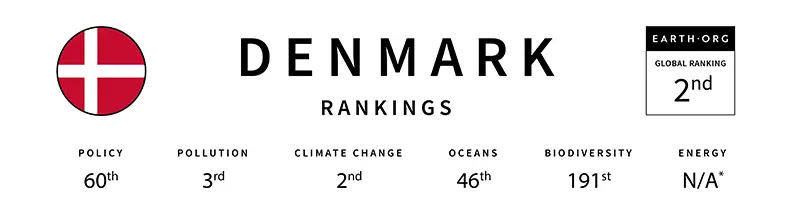
Denmark
Photo: Earth.org
Denmark is the undisputed global leader in offshore wind energy [3]. Its capital, Copenhagen, consistently ranks among the greenest cities in the world, setting an example for sustainable urban living.
This vision and effort trickles down into Denmark’s education system with their focus on real-world sustainability challenges, equipping students like you with hands-on skills in sustainability, environmental policy, and urban planning.
This makes Denmark a hotspot for those looking to make a tangible impact in the field of sustainability.
Study Sustainability in Denmark – 2025 Snapshot
Category
Details
Leading Universities
Copenhagen University University of Aarhus University of Southern Denmark
Average Tuition (Annual)
€6,000 – €12,000 (₹5L – ₹10L INR)
Language of Instruction
English (for master’s programs)
Career Opportunities
Environmental Consulting Wind Energy Development Urban Planning
Germany
Photo: Earth.org
Germany is building a low-carbon economy from the ground up, with a bold target of reaching climate neutrality by 2045 [4] – a visionary shift that’s turning German universities into innovation powerhouses for clean energy, circular economies, and sustainable engineering.
With cutting-edge programs in environmental engineering, energy systems, and sustainability science, German universities today are launchpads for students like you – students ready to lead the global green transition. You’ll also have the chance to tap into high-impact national projects like the Green Hydrogen Strategy, backed by billions in public funding.
Still wondering why Germany? Because it’s a rare chance to be part of real-time climate innovation, not just study it!
Study Sustainability in Germany – 2025 Snapshot
Category
Details
Leading Universities
Munich Technical University Freiburg University RWTH Aachen University
Average Tuition (Annual)
€1,500 – €3,000 (Public Universities)
Language of Instruction
German & English (Varies by program)
Career Opportunities
Sustainable Manufacturing Environmental Policy Renewable Energy Sector
The Netherlands
Photo: Earth.org
Internationally recognized for its innovative approaches to sustainable infrastructure and water management, the Netherlands has turned the threat of rising sea levels into a symbol of engineering excellence, leading the world in flood control and climate adaptation solutions.
Did you know? The Netherlands has built over 18,000 kilometers of dikes [5] to protect its land from flooding, with many of these structures serving as models for global water management!
It has also pioneered the “Room for the River” [6] project, a revolutionary approach that allows for controlled flooding to prevent disaster while enhancing ecosystems.
If this is something you see yourself contributing to, the Netherlands is your best option – think no more.
Study Sustainability in The Netherlands – 2025 Snapshot
Category
Details
Leading Universities
Delft University of Technology Wageningen University and Research Radboud University
Average Tuition (Annual)
€8,000 to €15,000 (₹6.5L to ₹12L INR)
Language of Instruction
English
Career Opportunities
Climate Adaptation Techniques Renewable Energy Environmental Engineering
New Zealand
Photo: Earth.org
In 2017, New Zealand became the first country to grant legal personhood to a natural entity– the Whanganui River [7] – recognizing it as a living entity with legal rights to be protected and preserved.
Two words – conservation and biodiversity. If these spark your curiosity, New Zealand could be your ideal study-abroad destination.
With its one-of-a-kind ecosystems and a strong academic focus on carbon neutrality and biodiversity, the country prepares graduates for thriving careers in conservation, climate science, and environmental management.
Why New Zealand, again? Because it’s a leader in integrating sustainability into policy, practice, and education, preparing you to drive meaningful change in conservation and environmental protection.
Study Sustainability in New Zealand – 2025 Snapshot
Category
Details
Leading Universities
Auckland University Massey University University of Otago
Q. Which country is best for studying sustainability in 2026?
A: Here’s the truth: There’s no one best – it depends on your goals, your budget, and your vision for impact. Choose:
1. Sweden for renewable energy innovation 2. Germany for green tech and engineering 3. Denmark for sustainable urban planning 4. Netherlands for climate adaptation 5. New Zealand for biodiversity and conservation
Q. Are Programs Taught In English?
A. Yes! Most sustainability-related Master’s programs in these countries are taught entirely in English, making them accessible for international students.
Q. Do these countries offer post-study work opportunities for international students?
A. Yes! Most of these top destinations offer generous post-study work visas, allowing you to stay and gain practical experience:
Germany: 18-month job-seeker visa after graduation Sweden: Up to 1 year to find work after completing your degree Denmark & Netherlands: Up to 2 years post-study work visa New Zealand: 3-year post-study work visa, depending on your program
Q. What kind of jobs can I get after studying sustainability?
A. Tons!The sustainability job market is booming. Depending on your specialization, you could work in: Climate Policy & Governance Green Architecture & Urban Planning Environmental Consulting Renewable Energy Project Management Conservation & Biodiversity Research Sustainable Supply Chain & CSR Strategy Companies, NGOs, governments, and startups all need sustainability experts. This field isn’t just future-proof – it is the future.
Q. What’s the average tuition cost?
A. Here’s a snapshot (annual tuition): 1. Germany: €1,500–€3,000 2. Denmark: €6,000–€12,000 3. Sweden: €12,000–€18,000 4. Netherlands: €8,000–€15,000 5. New Zealand: NZD 22,000–32,000
Want more options that match your budget and goals? Talk to an Admitix advisor today – we’ll guide you through it.



![Most Affordable STEM Programs (2026) in Europe [No GRE]](https://blog.admitix.in/wp-content/uploads/2025/07/image-44.png)