Uppsala University (UU), founded in 1477, is Sweden’s oldest and among its top 100 universities worldwide.
Recognized for excellence in natural sciences, engineering, social sciences, medicine, and humanities, UU offers 120+ English-taught master’s programmes, which are ideal for Indian students seeking world-class education in a historic yet innovation-driven environment.
Why Choose Uppsala University?
High global reputation – consistently within QS & ARWU Top 100–150
Broad subject offerings – everything from Engineering & CS to Public Health, Business, and the Humanities
Research-intensive – part of the Coimbra Group, with 52,000 students and 4,100 academic staff
Ideal student city – beautiful, safe, lively with over 200 student clubs; cost of living (~SEK 10,590/month ≈ ₹8.5 L/year)
Eligibility & Entry Requirements at Uppsala University
Requirement
Details
Bachelor’s Degree
3–4 year recognised STEM degree (equivalent to Swedish kandidatexamen)
Specific Subjects
Check each programme; some (e.g., Busi‑ness, CS) may need GMAT or math-heavy background
English Proficiency
IELTS ≥ 6.5 or TOEFL iBT ≥ 90 (Swedish level 6)
Application Platform
Apply via Universityadmissions.se between mid‑Oct to mid‑Jan
Tuition Fees
SEK 50,000–72,500/semester (~₹4.5–6.5 L)
Application Timeline (for Sep 2026 intake)
Application opens: 15 October 2025
Deadline: 15 January 2026
Documents due: by 3 February 2026
Admission results: late March 2026
Semester starts: 1 September 2026
Costs & Living Expenses
Tuition fees: SEK 100,000–145,000/year (~₹9–13 L)
Monthly expenses: SEK 9,500–11,600 (~₹70–85K) incl. rent, food, transport
Visa requirement: Show SEK 10,314/month (~₹75K) in blocked funds
Work info: Part-time work allowed (20 h/week), but openings are limited
Scholarships & Aid at Uppsala University
UU scholarships: Merit-based full tuition waivers for select master’s programmes
Swedish Institute (SI): Covers tuition + living stipend (highly competitive)
Other Swedish university scholarships & Erasmus+ for joint programmes
Indian scholarships: Inlaks, Tata, KC Mahindra applicable for fee-paying students
Post‑Study Work & PR Pathways
Residence permit: Post-study work allowed after graduation
Permanent Residence: Typically after 4–5 years of legal residence/work in Sweden
Tips for Admission Success
Strong SOP emphasising past projects, research alignment, and career goals
Relevant coursework for desired programme, especially in CS, Engineering, or Business
Optional GMAT can strengthen applications to Business & Management programmes
Apply early to ensure seat availability and visa processing time
Admitix guides Indian aspirants through every step of getting into Uppsala University:
Profile assessment and programme shortlisting
SOP, CV, and LOR crafting to match Swedish academic culture
Accurate documentation and application tracking
Scholarship identification and visa preparation
Book your free consultation now and secure a seat at one of Europe’s oldest and most prestigious universities!
FAQs – Uppsala University
Q. Do Indian 3‑year BTech degrees qualify? A: Depends on programme. Many engineering and social science masters accept 3-year degrees; check course requirements.
Q. Is GMAT required? A: Not universally; some Business programmes prefer it, but it’s optional and mostly boosts your profile.
Q. Can I support living costs through part-time work? A: Limited availability in Uppsala, so don’t rely solely on employment income.
Q. How competitive is admission? A: Acceptance rate for non-EU students is around 75–80%, but “conditionally qualified” apps are common early on.
Q. How long is the study permit valid? A: It covers the duration of your studies (e.g., 2 years for master’s), extendable after graduation with a job offer.
Interested in knowing about the top countries for sustainable development degrees? Great decision!
Today, Climate Change Is Accelerating– 2023 was the hottest year on record (Copernicus Climate Change Service) – and Natural Resources Are Running Out – By 2050, the world will need twice as many resources to sustain current lifestyles (UNEP).
Dire circumstances, truly. But allow me to introduce a POV shift:Amidst challenges lie opportunities. The world needs changemakers – and that could be you.
Start by studying Sustainable Development abroad – one of the fastest-growing fields in global education and careers. Here’s where to study –
Top Countries For Sustainable Development Degrees 2026:
Sweden
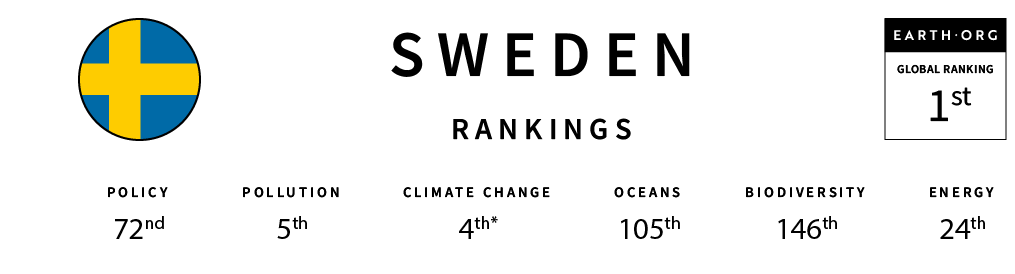
Photo: Earth.org
Fun fact: As of 2022, 66% of Sweden’s energy came from renewable sources [1] like hydropower, wind, and biofuels – one of the highest globally!
Sweden doesn’t just teach sustainability but lives it. A 2023 Nature Sustainability study [2] ranked Sweden among the top five nations globally in environmental innovation and climate research collaboration. Add to that an ambitious national goal of net-zero emissions by 2045, and you have a country that’s walking the talk.
By 2025, Sweden stands out as a top study-abroad destination for sustainability thanks to its future-forward policies, cutting-edge research, and world-class universities.
Bottom line? If you want a sustainability education in a country that actually practices what it preaches, Sweden is a no-brainer. It is #1 in the list of top Countries For Sustainable Development Degrees.
Study Sustainability in Sweden – 2025 Snapshot
Category
Details
Leading Universities
KTH Royal Institute of Technology Lund University Uppsala University
Average Tuition (Annual)
€12,000 – €18,000(₹10L – ₹15L INR)
Language of Instruction
English (Primarily for master’s programs)
Career Opportunities
Environmental Consulting Green Tech Startups Renewable Energy Sector
Denmark
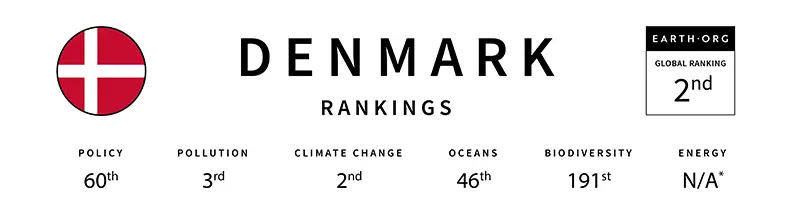
Photo: Earth.org
Denmark is the undisputed global leader in offshore wind energy [3]. Its capital, Copenhagen, consistently ranks among the greenest cities in the world, setting an example for sustainable urban living.
This vision and effort trickles down into Denmark’s education system with their focus on real-world sustainability challenges, equipping students like you with hands-on skills in sustainability, environmental policy, and urban planning.
This makes Denmark a hotspot for those looking to make a tangible impact in the field of sustainability.
Study Sustainability in Denmark – 2025 Snapshot
Category
Details
Leading Universities
Copenhagen University University of Aarhus University of Southern Denmark
Average Tuition (Annual)
€6,000 – €12,000 (₹5L – ₹10L INR)
Language of Instruction
English (for master’s programs)
Career Opportunities
Environmental Consulting Wind Energy Development Urban Planning
Germany
Photo: Earth.org
Germany is building a low-carbon economy from the ground up, with a bold target of reaching climate neutrality by 2045 [4] – a visionary shift that’s turning German universities into innovation powerhouses for clean energy, circular economies, and sustainable engineering.
With cutting-edge programs in environmental engineering, energy systems, and sustainability science, German universities today are launchpads for students like you – students ready to lead the global green transition. You’ll also have the chance to tap into high-impact national projects like the Green Hydrogen Strategy, backed by billions in public funding.
Still wondering why Germany? Because it’s a rare chance to be part of real-time climate innovation, not just study it!
Study Sustainability in Germany – 2025 Snapshot
Category
Details
Leading Universities
Munich Technical University Freiburg University RWTH Aachen University
Average Tuition (Annual)
€1,500 – €3,000 (Public Universities)
Language of Instruction
German & English (Varies by program)
Career Opportunities
Sustainable Manufacturing Environmental Policy Renewable Energy Sector
The Netherlands
Photo: Earth.org
Internationally recognized for its innovative approaches to sustainable infrastructure and water management, the Netherlands has turned the threat of rising sea levels into a symbol of engineering excellence, leading the world in flood control and climate adaptation solutions.
Did you know? The Netherlands has built over 18,000 kilometers of dikes [5] to protect its land from flooding, with many of these structures serving as models for global water management!
It has also pioneered the “Room for the River” [6] project, a revolutionary approach that allows for controlled flooding to prevent disaster while enhancing ecosystems.
If this is something you see yourself contributing to, the Netherlands is your best option – think no more.
Study Sustainability in The Netherlands – 2025 Snapshot
Category
Details
Leading Universities
Delft University of Technology Wageningen University and Research Radboud University
Average Tuition (Annual)
€8,000 to €15,000 (₹6.5L to ₹12L INR)
Language of Instruction
English
Career Opportunities
Climate Adaptation Techniques Renewable Energy Environmental Engineering
New Zealand
Photo: Earth.org
In 2017, New Zealand became the first country to grant legal personhood to a natural entity– the Whanganui River [7] – recognizing it as a living entity with legal rights to be protected and preserved.
Two words – conservation and biodiversity. If these spark your curiosity, New Zealand could be your ideal study-abroad destination.
With its one-of-a-kind ecosystems and a strong academic focus on carbon neutrality and biodiversity, the country prepares graduates for thriving careers in conservation, climate science, and environmental management.
Why New Zealand, again? Because it’s a leader in integrating sustainability into policy, practice, and education, preparing you to drive meaningful change in conservation and environmental protection.
Study Sustainability in New Zealand – 2025 Snapshot
Category
Details
Leading Universities
Auckland University Massey University University of Otago
Q. Which country is best for studying sustainability in 2026?
A: Here’s the truth: There’s no one best – it depends on your goals, your budget, and your vision for impact. Choose:
1. Sweden for renewable energy innovation 2. Germany for green tech and engineering 3. Denmark for sustainable urban planning 4. Netherlands for climate adaptation 5. New Zealand for biodiversity and conservation
Q. Are Programs Taught In English?
A. Yes! Most sustainability-related Master’s programs in these countries are taught entirely in English, making them accessible for international students.
Q. Do these countries offer post-study work opportunities for international students?
A. Yes! Most of these top destinations offer generous post-study work visas, allowing you to stay and gain practical experience:
Germany: 18-month job-seeker visa after graduation Sweden: Up to 1 year to find work after completing your degree Denmark & Netherlands: Up to 2 years post-study work visa New Zealand: 3-year post-study work visa, depending on your program
Q. What kind of jobs can I get after studying sustainability?
A. Tons!The sustainability job market is booming. Depending on your specialization, you could work in: Climate Policy & Governance Green Architecture & Urban Planning Environmental Consulting Renewable Energy Project Management Conservation & Biodiversity Research Sustainable Supply Chain & CSR Strategy Companies, NGOs, governments, and startups all need sustainability experts. This field isn’t just future-proof – it is the future.
Q. What’s the average tuition cost?
A. Here’s a snapshot (annual tuition): 1. Germany: €1,500–€3,000 2. Denmark: €6,000–€12,000 3. Sweden: €12,000–€18,000 4. Netherlands: €8,000–€15,000 5. New Zealand: NZD 22,000–32,000
Want more options that match your budget and goals? Talk to an Admitix advisor today – we’ll guide you through it.