Thinking of completing your bachelor’s degree abroad?Top-Up Degrees in UK are a fast-track route for Indian students who’ve completed a diploma or partial undergraduate studies and want to earn a full UK bachelor’s degree in just 1 year.
Here’s everything you need to know about top-up degrees in the UK for 2026:
What Are Top-Up Degrees in UK?
A Top-Up Degree is a one-year undergraduate program designed for students who already hold:
A 3-year diploma (polytechnic or equivalent)
Partial bachelor’s education (e.g., completed 2 years of BCom, BBA, BCA, etc.)
An HND (Higher National Diploma) or relevant Level 5 qualification
It allows you to “top up” your existing credentials to a full UK bachelor’s degree, typically equivalent to the third (final) year of a standard UK degree.
Who Should Consider UK Top-Up Degrees?
This option is ideal if you:
Want an international degree without repeating 3 years of study
Are finishing a diploma or foundation program in India
Want to pursue a postgraduate program or job in the UK after graduation
Are looking for an affordable way to study abroad
Popular Fields for Top-Up Degrees
Field
Sample Courses
Business
BA (Hons) Business Management (Top-Up)
IT & Computing
BSc (Hons) Computing (Top-Up)
Accounting & Finance
BA (Hons) Accounting and Finance (Top-Up)
Health & Social Care
BSc (Hons) Health Studies (Top-Up)
Hospitality
BA (Hons) Hospitality and Tourism (Top-Up)
Entry Requirements
Requirement
Details
Prior Qualification
3-year diploma or 2 years of bachelor’s in a relevant field
English Proficiency
IELTS 6.0 or equivalent
Academic Transcripts
Required, with clear year-wise breakdown
Statement of Purpose
Often required
CV/Work Experience
Useful for some vocational courses
Tuition & Post-Study Options
Living Costs: £9,500–£12,000 per year (~₹9–11 lakh)
Tuition Fees: £9,000–£14,000 (~₹9–13 lakh)
Post-Study Visa: You are eligible for the UK Graduate Route (2-year stay) after completing your top-up degree
Popular Universities Offering Top-Up Degrees
University of Hertfordshire
London Metropolitan University
University of Sunderland
Coventry University
Teesside University
Many of these are public universities with strong industry links and flexible intakes.
Want to study MBA Abroad? Looking for the QS Global MBA Rankings 2025? You are in the right place.
The QS Global MBA Rankings 2025 evaluate 1,157 full-time MBA and business master’s programs worldwide. For Indian students aiming to pursue an MBA abroad, these rankings offer a reliable benchmark for global reputation, employability, and ROI.
Top 10 Global MBA Programs (2025)
Rank
School
Country
1
Stanford Graduate School of Business
US
2
Wharton School, UPenn
US
3
Harvard Business School
US
4
MIT Sloan School of Management
US
5
London Business School
UK
6
HEC Paris
France
7
Cambridge Judge Business School
UK
8
Columbia Business School
US
9
IE Business School
Spain
10
IESE Business School
Spain
Regional Highlights & ROI
US dominates the top four spots, accentuating leadership in entrepreneurship, alumni outcomes, and thought leadership.
London Business School holds steady as the top non-US school.
Asia-Pacific’s top performer is Melbourne Business School, ranking 32nd globally and excelling in employability and ROI.
Indian Excellence on the Global Stage
India has made a strong showing:
IIM Bangalore at 53, followed by IIM Ahmedabad (60), IIM Calcutta (65), and ISB Hyderabad (86) among the top 100
In total, 14 Indian MBA programs are featured, up from 11 last year, highlighting India’s growing global footprint.
What This Means for Indian MBA Aspirants
Top-tier global programs: If you’re targeting elite schools (e.g. Stanford, Wharton), know the competition is fierce but career returns are unmatched.
Strong ROI and employability from places like Melbourne and ISB.
Regional alternatives: MBS at 32, CEIBS at 12th in Asia-Pacific, powerful options if you prefer shorter travel, cultural familiarity, and cost-effectiveness.
Wider opportunities through specialized master’s programs in Finance, Analytics, Supply Chain & Marketing, frequently ranked in the top 5.
How to Use This Ranking in Your MBA Planning
Align ranking with ROI & career goals: If your focus is tech startup or VC in the US, top 5 US schools are ideal. If you’re aiming for international business or regional ROI, LBS, HEC, Cambridge offer strong value.
Factor in costs & scholarships: Elite US schools often cost >₹1.5 crore; look for scholarships and ROI (e.g. LBS, ISB, MBS).
Match your background: Schools like IE and IESE in Europe value diverse global cohorts, which may work well for Indian students with cross-cultural experience.
Use regional strength: Asia-Pacific schools such as CEIBS or MBS cater well to those wishing to work in Asian markets post-MBA.
Research target schools’ average GMAT/GRE, work experience profiles, and career success.
Consider ROI using salary uplift and time to recoup tuition.
Draft a shortlist of 5–7 programs, including reach, match, and safety options.
Prepare SOP, resume, and application in Admitix-ready format.
Need Personalized Help?
At Admitix, we transform QS ranking insights into a personalized roadmap.
From aligning your profile with top-tier programs to fine-tuning essays, interview prep, and ROI analysis, we guide you through every step.
FAQs – Study MBA Abroad: QS Global MBA Rankings 2025
1. What is the best MBA program in the world for 2025? According to the QS Global MBA Rankings 2025, Stanford Graduate School of Business ranks #1 globally, followed by Wharton and Harvard.
2. Which Indian MBA colleges are in the top 100 globally? IIM Bangalore, IIM Ahmedabad, IIM Calcutta, and ISB Hyderabad are all ranked in the top 100 MBA programs worldwide in 2025.
3. Is it worth doing an MBA abroad for Indian students? Yes, especially if you’re targeting leadership roles in global firms, higher ROI, and international work exposure. Choose based on rankings, ROI, job placements, and alumni outcomes.
4. What is the average cost of an MBA abroad in 2025? MBA programs abroad cost between ₹30L to ₹80L, depending on the country and university. Scholarships and post-study work visas improve affordability and returns.
5. Do QS rankings matter in MBA admissions? QS rankings help shortlist credible, globally respected MBA programs. While they don’t guarantee admission, they reflect the school’s reputation, employability, and ROI.
Studying at a Russell Group university doesn’t have to break the bank. While these institutions are known for prestige and research excellence, several offer lower tuition fees, strong scholarships, and affordable living costs, making them ideal for Indian students on a budget. Let’s discuss these ‘Most Affordable Russell Group Universities for Indian Students‘ today.
What Makes a Russell Group University “Affordable”?
An affordable university isn’t just about low tuition—it’s a mix of:
Lower tuition fees
Generous scholarships
Low cost of living
Flexible part-time work options
Post-study work opportunities
Most Affordable Russell Group Universities for Indian Students (2025)
Here’s a breakdown of the most budget-friendly Russell Group universities based on total estimated cost (tuition + living), with scholarships available:
University
Avg. UG Tuition (per year)
Avg. PG Tuition
Scholarships Offered
City Living Cost (Monthly)
Notable Points
University of Glasgow
£18,000
£20,000
£10,000 Intl. Leadership Scholarship
£800–£950
Affordable Scottish city, high scholarship rate
University of Leeds
£17,500
£19,500
£5,000 Dean’s Scholarship
£850–£950
Popular with Indian students, affordable city
Queen’s University Belfast
£16,800
£18,800
£5,000 South Asia Scholarship
£700–£850
Lowest cost of living in UK, low tuition
University of Liverpool
£17,000
£18,000
Up to £5,000 India Excellence Award
£850–£950
Strong research uni in budget-friendly city
University of Nottingham
£18,100
£19,500
Up to 100% tuition (Developing Solutions)
£850–£950
High scholarship coverage, suburban feel
University of Sheffield
£17,600
£19,000
£2,500/year Intl. Scholarship
£850–£950
Safe, affordable, and inclusive
University of Birmingham
£18,500
£20,000
£2,500 India Achievement Award
£850–£1,000
Lower cost than London, diverse student base
University of Newcastle
£17,800
£18,800
Up to £5,000 merit-based awards
£800–£900
Northern England affordability
Cardiff University
£17,500
£19,000
£5,000 India Bursary
£750–£850
One of UK’s most affordable capitals
Tuition Fee Comparison: High vs Low
University
Annual PG Tuition (Approx.)
Imperial College London
£33,000–£38,000
LSE (London School of Economics)
£28,000–£35,000
University of Glasgow
£20,000
Queen’s University Belfast
£18,800
Also, note that London-based universities typically have much higher tuition and living costs.
Dreaming of studying at a prestigious UK university but worried about the cost? Good news: many Russell Group universities offer generous scholarships and funding options exclusively for Indian and other international students.
This guide breaks down all the key scholarships available, university-wise, so you can plan your study abroad journey smartly and affordably.
What Is the Russell Group?
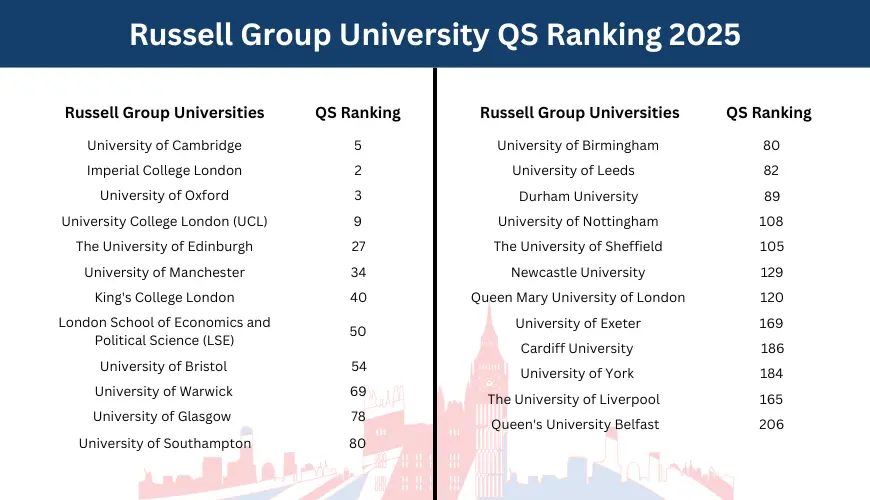
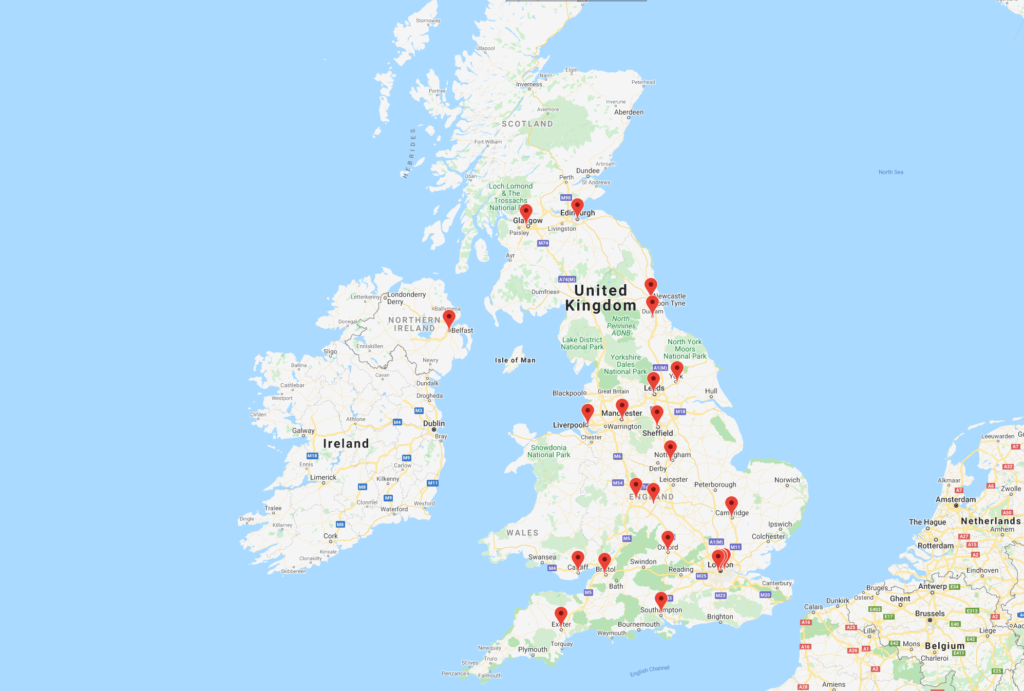
The Russell Group represents 24 of the UK’s top research-intensive universities, known for academic excellence, global reputation, and strong employability outcomes. Think of them as the UK’s Ivy League.
Scholarships at Russell Group Universities For Indian Students (2025)
Here’s a breakdown of major scholarships offered by each Russell Group university relevant to Indian students:
University
Scholarship Name
Level
Value (Approx.)
Eligibility
Deadline
University of Oxford
Reach Oxford, Clarendon Fund
UG/PG
Full tuition + living costs
Academic merit, financial need
Jan–Mar 2025
University of Cambridge
Cambridge Trust Scholarships
PG
Full/partial funding
Indian passport, academic excellence
Dec 2024–Jan 2025
Imperial College London
President’s India Scholarship
PG
£10,000–£15,000
Indian nationals with offer
May 2025
University College London (UCL)
Global Masters Scholarship
PG
£15,000
International students from lower-income backgrounds
April 2025
University of Edinburgh
Edinburgh Global Research Scholarship
PhD
Tuition fee difference
Research proposal, academic record
Feb 2025
University of Manchester
Global Futures Scholarship
UG/PG
£5,000–£10,000
Indian students with unconditional offer
June 2025
King’s College London
King’s India Scholarship
PG
£5,000
Indian nationals with strong academics
March 2025
University of Bristol
Think Big Scholarship
UG/PG
Up to £20,000
Academic merit, essay-based
April 2025
University of Warwick
Chancellor’s International Scholarships
PG/PhD
Tuition + stipend
Indian postgrad research applicants
Jan 2025
University of Glasgow
International Leadership Scholarship
PG
£10,000
Academic merit
April–May 2025
University of Leeds
Dean’s Excellence Scholarship
PG
£5,000
Academic excellence
May 2025
University of Birmingham
India Outstanding Achievement Scholarship
UG
£2,500
Indian passport, academic merit
June 2025
University of Nottingham
Developing Solutions Scholarship
PG
50–100% tuition
Indian nationals focused on development
May 2025
University of Sheffield
International Undergraduate Scholarship
UG
£2,000–£2,500/year
Academic performance
April–May 2025
Queen Mary University of London
QMUL India Scholarship
UG/PG
£3,000
Automatically applied if eligible
Rolling
University of Southampton
GREAT Scholarship (India)
PG
£10,000
Indian passport + conditional offer
May 2025
Durham University
Vice-Chancellor’s Scholarship
UG
£5,000
Exceptional academic record
April 2025
Eligibility Criteria Snapshot
Criteria
Typical Requirement
Nationality
Indian citizen or Indian passport holder
Academic Record
70–85%+ or 2:1 UK equivalent
Offer Letter
Unconditional or conditional admission offer
Language
IELTS/TOEFL (Some scholarships waive based on medium of instruction)
Documentation
SOP, LORs, proof of income, transcripts
How to Apply?
Step
Action
1
Apply to the university and get an offer (conditional/unconditional)
2
Review scholarship deadlines and eligibility
3
Submit a separate scholarship application (if required)
4
Write a compelling personal statement or essay
5
Upload academic transcripts, passport, and financial docs
6
Attend interviews (if shortlisted)
7
Wait for results and confirm funding
External Scholarships at Russell Group Universities You Can Combine
Scholarship
Value
Offered By
Applicable To
Commonwealth Scholarship
Full tuition + living
UK Govt.
Master’s & PhD
Chevening Scholarship
Full tuition + stipend
FCDO, UK Govt.
Leadership potential & experience
Inlaks Shivdasani Foundation
Up to $100,000
Private trust (India)
Top global universities
JN Tata Endowment
Loan-Scholarship
Tata Trusts
PG courses abroad
British Council GREAT Scholarship
£10,000
UK Govt. + partner unis
Indian PG students
Final Tips for Indian Students
Apply early—some scholarships close even before university deadlines.
Focus on academic excellence and leadership in your SOP.
Combine university + external scholarships where allowed.
Reach out to international student offices—they often guide you.
Need Personalized Help?
Choosing the right university, shortlisting scholarships, and perfecting your SOP can be overwhelming. Admitix can help you with not just that, but also:
Scholarship Shortlisting
SOP and LOR Review
University Applications
Mock Interviews for Chevening/Commonwealth
Visa & Document Prep
Get started with a free consult today!
FAQs – Scholarships at Russell Group Universities
What is the Russell Group? It’s a group of 24 top UK research universities known for academic excellence.
Can Indian students get scholarships at Russell Group universities? Yes, many offer scholarships exclusively for Indian and international students.
Do I need to apply separately for these scholarships? Some require a separate application, while others are automatic based on your admission.
When should I apply for UK university scholarships? Ideally 6–10 months before your course start date.
Are full scholarships available? Yes, universities like Oxford, Cambridge, and Warwick offer fully funded options.
What is the GPA or percentage required? Most scholarships need 70–85% or higher in your previous degree.
Can I combine university and external scholarships? In many cases, yes—check terms for each.
Do I need IELTS for scholarship eligibility? Usually yes, but some waive it if your education was in English.
Is financial need considered for UK scholarships? Some are merit-based, while others also consider financial background.
What documents are needed to apply? You’ll need transcripts, SOP, LORs, passport, and sometimes income proof.
Many Indian students dream of studying in the UK, but few realize just how many scholarships are available. Yes! Offered by the UK government, universities, and private organizations, these scholarship opportunities in UK can cover tuition, living expenses, and even travel costs.
This comprehensive guide will help you discover:
UK Government Scholarships
Scholarship Name
Level of Study
Value of Scholarship
Eligibility Criteria
Application Deadline
Chevening Scholarships
Postgraduate (Master’s)
Full tuition, airfare, monthly stipend
Indian citizen, 2+ years work experience, undergraduate degree, English proficiency
August – November (Annually)
Commonwealth Scholarships
Master’s, PhD
Tuition fees, airfare, living allowance
Indian citizen, strong academic profile, demonstrate financial need
October (Annually)
GREAT Scholarships – India
Postgraduate
£10,000 towards tuition fees
Indian citizen, accepted into a UK university offering GREAT Scholarships
With careful planning, a strong application, and the right support from Admitix, you can study abroad in the UK.
Start today!
FAQs
Q. What are the most popular UK cities among Indian students? A. London, Manchester, Edinburgh, and Birmingham are top picks due to university reputation, job hubs, and strong Indian communities.
Q. Can Indian students work part-time while studying in the UK? A. Yes, Indian students on a Student visa can work up to 20 hours per week during term and full-time during vacations.
Q. Are scholarships available for Indian students in UK universities? A. Absolutely. Many unis offer scholarships like GREAT, Commonwealth, and university-specific ones for Indian applicants.
Q. What are the academic requirements to apply from India? A. Typically, 65%–85% in Class 12 for undergraduate and 55%–70% in bachelor’s degree for postgrad, plus English proficiency (e.g., IELTS).
Q. How early should Indian students apply to UK universities? A. Ideally 10–12 months before intake (especially for September starts), to allow time for offers, visas, and financial planning.
The UK grading system is a unique and structured framework used by universities to evaluate academic performance.
It is primarily divided into degree classifications for undergraduate and postgraduate programs. These classifications are based on percentage ranges and are often converted into Grade Point Averages (GPA) for international equivalence.
It might appear confusing, but if you’re a student planning to study in the UK, this is crucial information. This guide will break down the grading system percentage-wise, explain the classifications, and answer common questions.
Key Classifications in the UK Grading System
First Class (1st)
Percentage Range: 70% and above
GPA Equivalent: 4.0 (or A grade)
What It Means: A first-class degree is the highest academic achievement, showcasing exceptional performance.
Upper Second Class (2:1)
Percentage Range: 60% – 69%
GPA Equivalent: 3.3 – 3.7
What is an Upper Second Class Honours Degree?: Often referred to as a “2:1,” this is a strong academic result and is highly regarded by employers and postgraduate programs.
Lower Second Class (2:2)
Percentage Range: 50% – 59%
GPA Equivalent: 2.7 – 3.0
2nd Class Percentage: This classification indicates a satisfactory performance.
Third Class (3rd)
Percentage Range: 40% – 49%
GPA Equivalent: 2.0 – 2.3
University Pass Mark: A third-class degree is the minimum passing grade for most undergraduate programs.
Fail
Percentage Range: Below 40%
GPA Equivalent: Below 2.0
What It Means: A fail indicates that the student has not met the minimum academic requirements.
The UK grading system is percentage-based, making it easier to understand performance levels. Here’s a quick breakdown:
Classification
Percentage Range
GPA Equivalent
First Class (1st)
70% and above
4.0
Upper Second Class (2:1)
60% – 69%
3.3 – 3.7
Lower Second Class (2:2)
50% – 59%
2.7 – 3.0
Third Class (3rd)
40% – 49%
2.0 – 2.3
Fail
Below 40%
Below 2.0
What is First Class Percentage Range?
In the UK, first class starts at 70% and is a mark of excellence.
In other countries, it is often equated to an “A” grade and is highly valued both academically and professionally.
Grade Wise Percentage and GPA Conversion
For international students, understanding the grade wise percentage and its GPA equivalent is essential.
Here’s a simplified conversion:
Percentage
Approx. GPA (US Scale)
UK Degree Classification
70% and above
4.0
First Class
60% – 69%
3.3 – 3.7
Upper Second Class (2:1)
50% – 59%
2.7 – 3.0
Lower Second Class (2:2)
40% – 49%
2.0 – 2.3
Third Class
What is an Upper Second Class Honours Degree?
An upper second class honours degree, or 2:1, is one of the most common classifications awarded in the UK.
It signifies a strong academic performance and is often the minimum requirement for postgraduate programs and competitive job roles.
What is the University Pass Mark?
The university pass mark in the UK is 40%.
This is the threshold for earning a degree. Falling below this mark results in a fail, requiring students to retake exams or modules.
Quick Recap on Key Classifications in the UK Grading System
Classification
Percentage Range
GPA Equivalent
Description
First Class (1st)
70% and above
4.0 (or A grade)
The highest academic achievement, showcasing exceptional performance.
Upper Second Class (2:1)
60% – 69%
3.3 – 3.7
A strong academic result, highly regarded by employers and postgraduate programs.
Lower Second Class (2:2)
50% – 59%
2.7 – 3.0
Indicates satisfactory academic performance.
Third Class (3rd)
40% – 49%
2.0 – 2.3
The minimum passing grade for most undergraduate programs.
Fail
Below 40%
Below 2.0
Indicates the student did not meet minimum academic requirements.
Need Personalized Help?
We know, navigating the UK grading system can be challenging as international students. Worry not! Admitix specializes in helping students achieve their academic goals.
From personalized counseling to application assistance, we’re here to guide you every step of the way.
Let us help you unlock your potential and succeed in the UK education system!
FAQs About the UK Grading System
Q. What is the percentage range for a first-class degree?
A. A first-class degree requires a percentage of 70% or above.
Q. What does an upper second class honours degree mean?
A. It means achieving a percentage between 60% and 69%, indicating strong academic performance.
Q. What is the university pass mark in the UK?
A. The pass mark is 40%, which is the minimum percentage required to pass a module or degree.
Q. How does the UK grading system compare to GPA?
A. The UK grading system can be converted to GPA, with a first-class degree equating to a 4.0 GPA.
Q. What is the percentage for a lower second class (2:2)?
A. A 2:2 corresponds to a percentage range of 50% – 59%.
London has always been a dream destination for international students. Reasons? Its top-notch education, incredible career prospects, lively city life, and more. But let’s be real, living and studying in London in London comes with its costs.
If you’re planning to move here for higher studies, it’s important to get a practical and clear idea of what to expect financially. This will help you make the most of your time and experience in the city.
In this blog, we break it all down for you.
Factors Impacting Study Cost In London
So, what exactly influences the cost of studying in London? Here’s a closer look at the key factors:
Tuition fees for international students
Cost of living, including rent, food, and transport
Pre-arrival and post-arrival expenses
Now, let’s dive in and explore what it really takes to study in London without breaking the bank!
Tuition Fee Costs for Indian Students
Without a doubt, London is the ideal study-abroad destination for international students; however, compared to other British cities, the cost of living here for students is far higher. But, choosing to attend university in this city means you will have access to top-notch teaching and research facilities as well as excellent career opportunities – the pros, you see.
Therefore, according to your level of study, the cost of studying in London for you is as follows:
Degree Type
Average Annual Tuition Fee
Bachelors in London
£10,000 – £20,000
Masters degree in London
£10,000 – £20,000
Doctoral Degree in London
£15,000 – £24,000
Further, for your better understanding, below is a detailed overview categorized for private and public universities in London:
Private Universities in London
If you choose a private university in London for your higher education, your cost of study in London may be slightly higher than those who choose to study in public universities. Here are some of the famous universities and their yearly tuition fees:
University Name
Tuition Fees (annually)
GSM London
£10,000
BPP University
£9,500
Regent’s University London
£18,500
St. Mary’s University London
£12,900
Public Universities in London
Now, we share a similar breakdown of finances if you plan to opt for public universities during your higher studies in London. Here are some famous public universities in London and their respective study cost:
Having shared with you areas that would need financial commitments should you choose to study abroad in London, we now share crucial information on scholarships to support your stay in the UK.
Scholarships
Average Amount (in £)
Gates Cambridge Scholarship
£17,500 stipend per annum
Imperial College London Ph.D. Scholarship
£16,500
GEMS International Undergraduate Scholarship
£2,000 fee reduction each year
Cambridge University MBA Scholarship
£30,000
Living Expenses in London for Indian Students
Now, specifically regarding Indian students and their potential study costs in London. The average monthly living expenses in London for Indian students are around £1,015. This is if they live outside London. Likewise, the average expense for those who reside in inner London is around £1,265 per month.
Below is an overview of the cost of living in London for Indian students:
Expenses Type
Amount (in £)
Accommodation
£8,100 per year
Food
£3,000 per year
Travel
£1,220 per year
Leisure and Miscellaneous Costs
£2,220 per year
Pre-arrival and Post-arrival Costs of Studying in London – What You Need to Budget For
Alright, so you’ve decided to study in London – amazing choice! But before you start, let’s talk about the costs you’ll need to cover before and after you arrive. Planning ahead will save you from any last-minute surprises, and trust me, London is full of surprises (some fun, some… less fun for your wallet).
Pre-Arrival Costs
This cost includes what you’ll spend before you even get there. Before you hop on that flight, there are a few essential expenses to take care of:
Expense Category
Details / Estimated Cost
Entrance Exams
– GRE
₹15,800
– GMAT
₹18,500
– IELTS/UKVI
₹15,100
– TOEFL
₹13,770
University Application Fees
£50 – £150 per university (check individual websites)
Includes mailing documents, sending test scores, etc.
Flight Tickets to London
₹27,887 – ₹31,794 (one-way; book early for best rates)
Post-Arrival Costs
Coming to Post-arrival costs, this cost includes what you’ll spend once you’re in London.
Once you land, here’s what you’ll need to factor into your budget every month:
Expense Category
Details / Estimated Cost
Tuition Fees
£10,000 – £24,000 per year (varies by course & university)
Living Expenses
~£1,265 per month (includes rent, food, travel, etc.)
Money-Saving Tips
Use student discounts, get part-time work, follow budget hacks
Need Personalized Help?
Studying in London can be a life-changing experience – but planning your finances, picking the right university, and navigating scholarships can feel overwhelming.
That’s where expert guidance can make all the difference. With personalised support, strategic advice, and help from study-abroad mentors like Admitix, your London dream isn’t just possible – it’s doable.
Let’s make London happen – together.
FAQs – Living and Studying In London
Is London too expensive for international students? London can be pricey, yes. But with smart budgeting, scholarships, and student discounts, you can absolutely manage it. Many students also take up part-time jobs to support themselves.
What’s the average cost of living in London for Indian students? Expect around £1,265/month if you live in inner London, and about £1,015/month if you’re outside central zones.
Are there affordable universities in London? Yes. Some public universities like London Metropolitan University and The University of London offer relatively lower tuition fees, starting around £4,500 – £10,000/year.
Can Indian students get scholarships in London? Definitely! Scholarships like GEMS International, Gates Cambridge, and Imperial College PhD Scholarships offer substantial financial support.
Do I need IELTS or TOEFL to study in London? In most cases, yes. Universities require proof of English proficiency. Some may waive it if you’ve studied in English-medium institutions before – but always check specific university